How a User-Experience Obsession Became Saudi Arabia's Ticketing Backbone
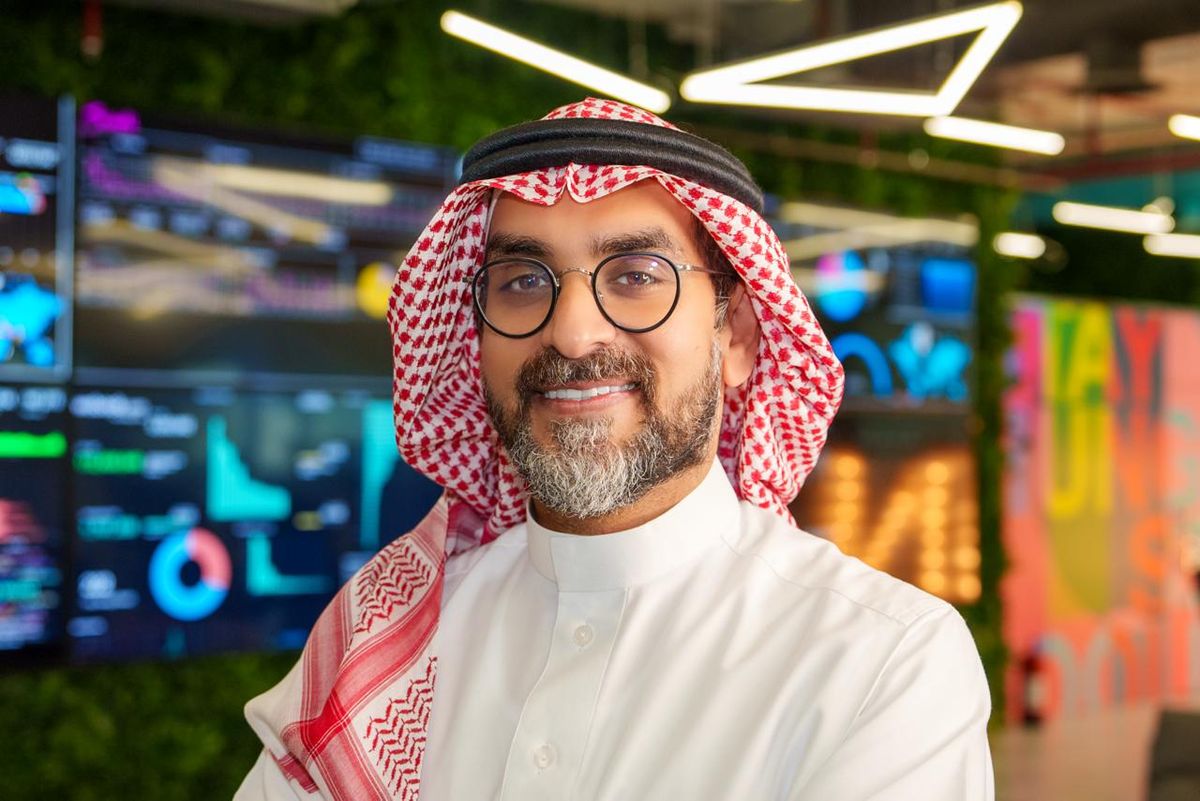
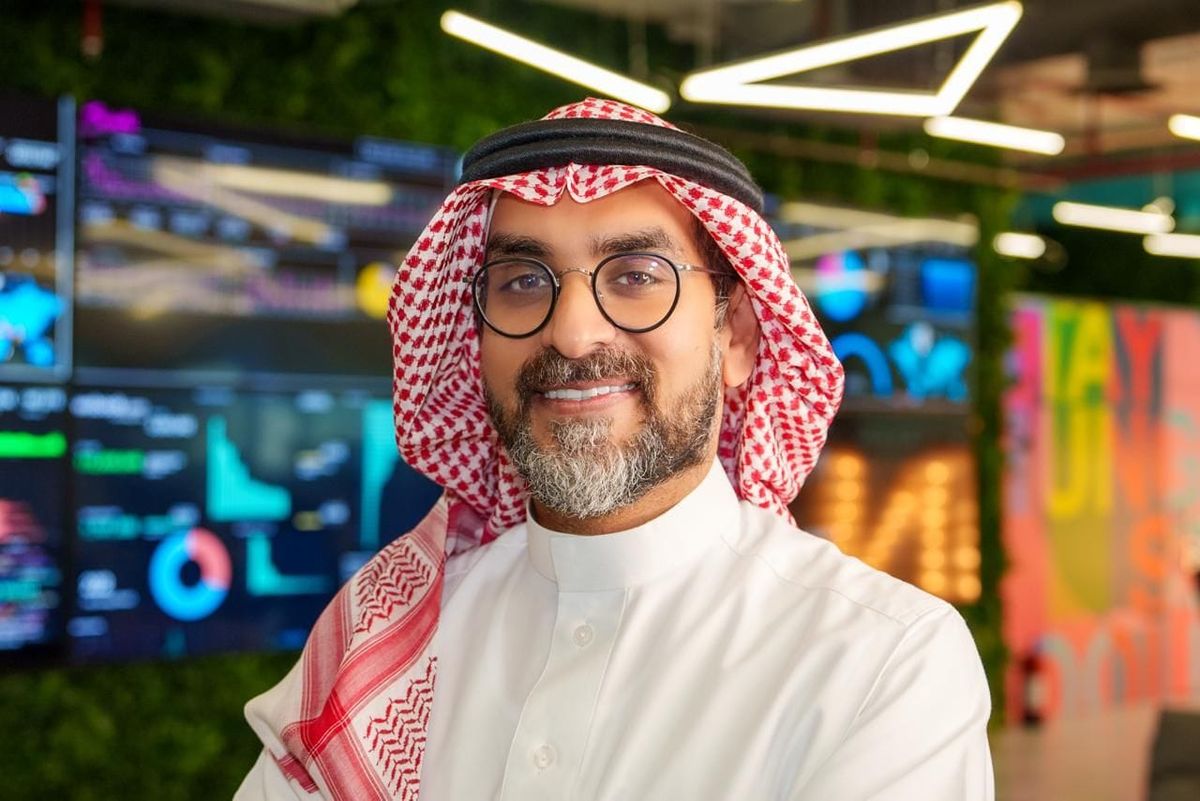
When Nadeem Bakhsh stands on a conference stage and says webook.com is "not a ticketing company" but "the gateway to fun," it lands like startup branding. It is also the most accurate description of both the product he has built and the way he has thought about products for most of his career.
When Nadeem Bakhsh stands on a conference stage and says webook.com is "not a ticketing company" but "the gateway to fun," it lands like startup branding. It is also the most accurate description of both the product he has built and the way he has thought about products for most of his career.
Bakhsh is the co-founder and CEO of webook.com, the platform through which millions of people now buy their way into Riyadh Season, Saudi Pro League matches, the Esports World Cup, and most of the large public events the Kingdom has staged in the last four years. It is one of the most-used consumer products to come out of Saudi Arabia's entertainment build-out. What is less understood is the person behind it — and the difference between what webook.com is often said to have achieved and what it has actually done.
"I believe 'The Experience Matters.' My goal is to make the world user friendly."
That line, which Bakhsh uses to describe himself, is not marketing. It is close to a literal account of his résumé, and it explains more about webook.com than any claim about disruption or global ambition.
He Was a User-Experience Consultant Before He Was a CEO
Bakhsh did not come to ticketing from events, media, or hospitality. He came to it from user experience — the discipline of making software easier to use.
Before webook.com, he served as Senior Vice President of Digital and Innovation at Mobily, one of Saudi Arabia's largest telecom operators, where he led the development of a widely used telco app. Earlier, he founded UXBERT Labs, a boutique firm built around user research, usability, and digital experience. He also founded Kafu Games, a gaming and esports community platform in the region, and sat on the board of the Saudi Esports Federation. His listed education includes Harvard Business School, a credential drawn from his own professional profiles rather than an independent record.
Read together, that is not the biography of a ticketing executive. It is the biography of a product and experience specialist who repeatedly built consumer-facing digital tools, then found the largest possible canvas for that skill in a country suddenly staging events at enormous scale.
The company itself reflects that lineage. webook.com began in the mid-2010s as Halayalla, a Saudi "super app" for finding and booking local sports and entertainment, and was co-founded by Bakhsh alongside a small team that included Farrukh Bandey, Yousef Shanti, Faheem Bakhsh, and Hamdi Missaoui. In 2023, the company rebranded to webook.com — a decision Bakhsh has explained in plain commercial terms rather than visionary ones.
"Our former and original brand had a very local flair but didn't translate internationally and wasn't descriptive as to what we do."
The reasoning is revealing. The rename was a usability decision applied to the company's own name — the same instinct that governs how he talks about the product, turned on the business itself.
What Actually Made webook.com Dominant
Most coverage credits webook.com's growth to superior technology beating global competitors in an open market. The evidence points somewhere more specific, and more interesting.
webook.com's position rests heavily on a set of exclusive and official mandates to sell access to Saudi Arabia's state-organized events. That is the part the promotional narrative tends to leave out, and it is the part that actually explains the scale.
The mandates behind the scale
As of the 2025 edition, webook.com served as the exclusive ticketing partner for Riyadh Season for the fourth consecutive year, working with the General Entertainment Authority. The company has also acted as the official ticketing partner for the Ministry of Sports, the Ministry of Culture, the Saudi Pro League, and the Saudi Tourism Authority, and it secured a three-year agreement with the Roshn Saudi League to run football ticketing. In esports, it is the official ticketing partner of the Esports World Cup, the tournament funded by the Public Investment Fund.
This matters for how the achievement should be read. Inside Saudi Arabia, webook.com is not primarily winning a contested market on product quality; to a large degree it is the market's designated rail, tied to government bodies and PIF-backed entities. The company is founder-led and privately held — it is not, on the public record, state-owned — but its central position runs directly through the state's entertainment and sports apparatus.
That is a real accomplishment. It is simply a different one than "surpassing global competitors," and naming it accurately is what makes the rest of the story credible.
Delivering when the whole country shows up at once
The harder, more defensible achievement is operational. A designated ticketing partner is only useful if it does not collapse the moment demand arrives, and Saudi event on-sales produce some of the most punishing traffic spikes in consumer software — hundreds of thousands of people attempting to buy in the same minutes.
Bakhsh draws the contrast himself, pointedly.
"Unlike recently publicized high-profile concerts like Taylor Swift and Coldplay, where overwhelming demand left fans frustrated, our infrastructure guarantees high performance."
By the company's own account, webook.com has processed around 100,000 tickets on an average peak day and up to 150,000 in a single day. On the integrity side, it reported nullifying roughly 40,000 black-market tickets, shutting down more than 5,000 fraudulent accounts, and moving over 200,000 tickets through an official, verified resale channel — a feature it describes as the first of its kind in the region. These figures are self-reported, but they are unusually concrete for this kind of company, and they describe a specific problem — scalping and fraud — solved with specific mechanisms rather than adjectives.
The Idea He Keeps Repeating
Ask what Bakhsh actually believes, and the same conviction surfaces in almost every interview: that people do not want tickets, they want the experience, and that the winner is whoever removes the most friction between the two.
"We want to grow the ecosystem, empower the new fun economy, and sell memories not just tickets."
It is easy to dismiss as a slogan. But it maps onto how the company is run. Bakhsh describes a design and research team that benchmarks banking, e-commerce, transport, and social networks — importing usability standards from industries with far higher stakes than events. The product decisions follow the same logic: discovery tools to surface events users didn't know they wanted, premium-seat auctions, verified resale, live-event communities and chat, and a steady expansion into flights, hotels, and dining so that a single booking becomes an evening rather than a transaction.
Internally, the strategy has a name — DIGA, for diversification, innovation, globalization, and automation. It is a tidy framework, and like most such frameworks it is partly retrospective branding. What gives it weight is that each pillar corresponds to something visible: new booking categories, the anti-fraud and auction features, the move into new countries, and the automation needed to survive peak load.
The through-line is consistent enough to take seriously: Bakhsh runs webook.com as a user-experience problem that happens to involve tickets, not as a ticketing business that happens to have an app.
The Bet on Saudi Technology Going Abroad
What Bakhsh is increasingly known for is a larger argument he has attached himself to — that Saudi companies should stop being acquisition targets and start being acquirers.
In June 2026, webook.com bought SmartMove, a Portuguese event-technology company with more than three decades in club membership, ticketing, and stadium access, giving webook.com its first operational base in Europe. Terms were not disclosed. Bakhsh framed the deal as a thesis, not just a transaction.
"Deals like this one show that Saudi companies don't have to wait to be acquired. They can be the ones doing the acquiring."
He has been blunt about what he thinks maturity looks like for the Saudi startup scene, and it is not fundraising.
"The real measure of an ecosystem's maturity isn't how many startups raise money. That's an input. What actually matters is whether companies can build real technology, generate sustainable revenue, make acquisitions, integrate international teams, and compete in markets where they weren't born."
This is the reputation Bakhsh is building for himself: not "entertainment visionary," but advocate and test case for Saudi technology as an export. It is a more precise and more falsifiable position — which is exactly why it is worth watching.
The Test That Comes Next
Everything that makes webook.com dominant at home, exclusive mandates, a captive pipeline of state events, a friendly regulatory environment, disappears the moment it operates abroad. In Portugal and France, webook.com has no home-field advantage. It is one vendor among incumbents, competing on the product quality it has always claimed to have.
That is the real experiment now underway. The Esports World Cup's 2026 staging in Paris, delivered through webook.com to fans across more than 100 countries, and the SmartMove base in Europe are the first meaningful tests of whether the platform wins where it cannot be designated the winner.
There is a financial test running in parallel. Bakhsh has said webook.com is preparing for an eventual IPO, has hired a CFO with listing experience, and is targeting a billion-dollar valuation, ambitions that will subject the company's self-reported numbers to a scrutiny that press releases never impose. Those numbers have climbed quickly: from a claimed 7 to 8 million users in early 2025 to a claimed 17 to 18 million by mid-2026. Public markets tend to ask harder questions about figures that move that fast.
For a decade, Bakhsh has bet on a single idea, that the experience matters, and that whoever makes it effortless wins. Inside Saudi Arabia, the state handed him an unmatched stage to prove it. The question that will define the next chapter is whether the same idea holds up on stages no one reserved for him.
 Ameer Albahouth