
How Abdallah Jum'ah Turned Saudi Aramco Outward
How Abdallah Jum'ah ran Saudi Aramco for 14 years without being an oil man, and turned the world's largest producer outward.
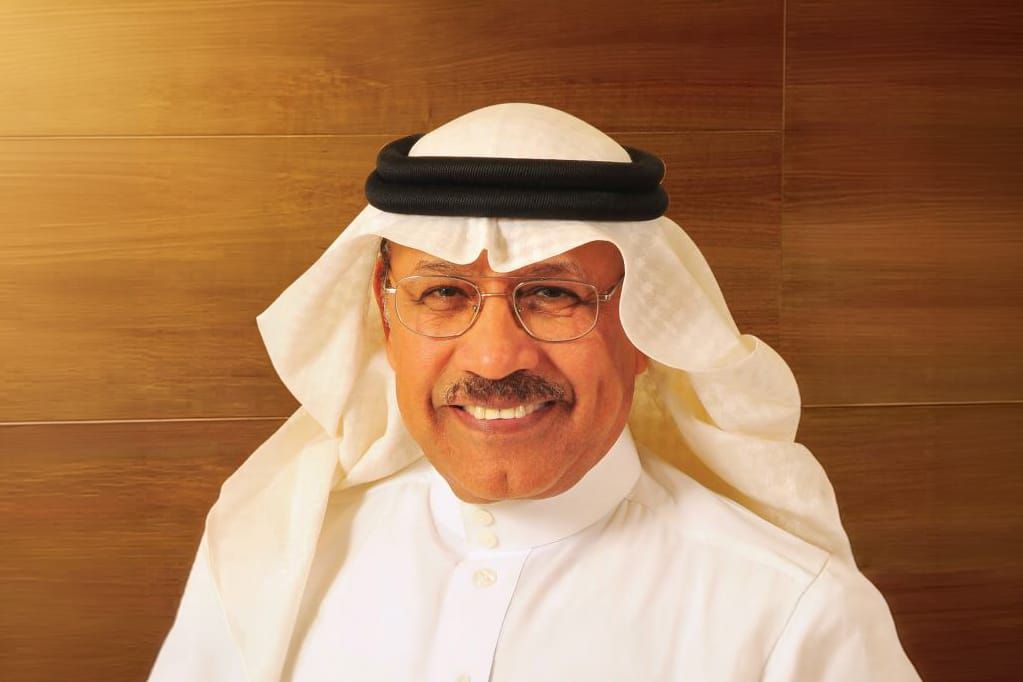
He was not an oil engineer. The man Saudi Arabia chose in 1995 to run the largest oil company on earth had studied political science, not petroleum. His early career was spent in government affairs and public relations, not in the fields. When Abdallah Jum'ah was named President and CEO of Saudi Aramco by royal decree in December 1995, he was taking charge of an institution that already held roughly a quarter of the world's proven oil reserves and had been ranked the number-one oil company in the world for years. Almost nothing about its dominance was his to create.
What was his to decide was what the company would become next. Over the following fourteen years, Jum'ah pushed Aramco outward: into international refining, into petrochemicals, and into a public argument about the future of oil itself. He ran it through the cheapest oil market in a generation and then the most expensive, and through the most dangerous security environment the Kingdom's energy industry had faced.
"Saudi Aramco is the world's single most important energy provider."
He said it plainly, and then he qualified it. The role, he added, was a source of pride but also "a huge responsibility." That framing tells you how Jum'ah understood the job. He did not run Aramco as a personal platform. He ran it as a custodian of something larger than himself, and much of what he did followed from that.
The Man Chosen to Take Aramco Global
Jum'ah was born in al-Khobar, in the Eastern Province, in 1941. He earned a bachelor's degree in political science from the American University of Beirut in 1968 and later completed Harvard Business School's Program for Management Development. He joined Aramco the same year he graduated, starting in government affairs and moving into public relations, where he supervised publications and then managed the department.
This is an unusual foundation for an oil executive, and it matters. Jum'ah rose through the parts of the company that dealt with people, government, and communication rather than reservoirs and rigs. He ran power systems in the early 1980s, led industrial relations later that decade, and in 1991 moved to international operations, becoming its executive vice president in 1992. There he built the downstream joint ventures that would define his later strategy, taking stakes in refiners in the United States, South Korea, the Philippines, and Greece.
His path to the top seat says something about intent. When Ali Al-Naimi, Aramco's leader since the 1980s and the first Saudi to run the company, left in August 1995 to become oil minister, the division of labor was read at the time as deliberate. One trade publication described it this way: Al-Naimi the geologist went to the ministry to drive upstream expansion at home, while Jum'ah was given the top Aramco post to emphasize the company's international role. Whether or not that fully captures the decision, it captures the shape of Jum'ah's tenure. The commercial and international dimensions of Aramco are where a CEO in his position had the most room to leave a mark, and they are exactly where he concentrated.
It is worth being precise about what he inherited. Aramco was already the world's largest oil producer. Its reserves, its fields, and its rank were built by predecessors and by the American Aramco legacy that preceded full Saudi ownership. Jum'ah did not turn a struggling company around. He took a dominant one and decided what to do with its dominance.
Betting on Capacity When Oil Was Cheap
The clearest strategic decision of the era was the one to build.
In 1998, Arabian crude sold for as little as about $10 a barrel. Capital spending across the industry dried up, and inside Aramco projects were being turned down. Then Chinese and Indian demand began to lift prices, and the company moved. In 2004, Aramco launched a program to raise its production capacity from around nine million barrels per day toward roughly twelve million, and the following year its board doubled the expected cost of its major projects to approximately $50 billion. The stated target became a maximum sustainable capacity of 12.5 million barrels per day by 2009.
Honesty requires a caveat here. Production capacity in Saudi Arabia is ultimately state policy, set through the Supreme Council for Petroleum and Minerals and a board chaired by the oil minister. Jum'ah sat on that council from 2000, but the decision to expand capacity was not his alone to make. What he owned was the execution: delivering a wave of megaprojects on demanding schedules without a large increase in company headcount.
Some of that work came online during his tenure. The remote Shaybah field, deep in the Empty Quarter, began producing in 1998 after construction that started the year he became CEO. Gas plants at Hawiyah and Haradh were commissioned in 2001 and 2003. Other pieces of the program, including the giant Khurais development and the Manifa offshore field, were launched under Jum'ah but finished by his successors after 2008. Crediting him with the ribbon-cuttings would be wrong. Crediting the decision to commit tens of billions to capacity near the bottom of the price cycle, and then to build it, is fair. That spare capacity became the buffer the Kingdom used to steady global markets for the next decade.
Turning Crude Into Chemicals
If the capacity buildup was largely a national decision executed well, the move into petrochemicals was closer to a genuine reorientation of the company.
For most of its history Aramco sold crude. Under Jum'ah it began converting more of its hydrocarbons into higher-value products. The signature move was PetroRabigh, a refining and petrochemical venture with Japan's Sumitomo Chemical. The agreement, worth roughly $4.3 billion when it was signed in 2004, marked Aramco's entry into the chemicals business. Jum'ah framed it as more than a commercial deal, noting at a tense moment for the region that such an investment "sends a powerful message that this country is secure and stable."
The strategic logic outlasted him. The idea that Aramco should be an integrated energy and chemicals company, capturing value further down the chain rather than exporting raw barrels, is now central to how the company describes itself and how the Kingdom thinks about diversifying its economy. Jum'ah did not complete that transformation. Later ventures and far larger chemicals investments came after 2008. But the direction was set on his watch, and PetroRabigh was the first substantial step.
Keeping the World Confident in Saudi Oil
Jum'ah's most distinctive contribution may have been rhetorical, and it fit the communicator he had always been.
In the mid-2000s, as oil prices climbed and "peak oil" theories gained ground, he became one of the industry's most prominent skeptics of the idea that supply was running out. In a 2006 address he laid out the counter-argument:
"We are looking at more than four and a half trillion barrels of potentially recoverable oil."
That figure, he argued, meant the world had consumed only about 18 percent of its conventional potential, enough to last some 140 years at the consumption rates of the time. The claim was contested then and remains debatable now. Its purpose was strategic. By insisting that scarcity was a myth, Jum'ah was defending both the long-term value of Saudi reserves and Aramco's standing as the supplier the world could rely on for decades. He paired the optimism with realism about alternatives, telling one interviewer that new energy sources would "supplement rather than replace oil" for the foreseeable future.
This reassurance work extended to security. The Iraq war and a wave of regional instability put Saudi facilities under scrutiny and, in 2004, under direct attack. Jum'ah's public posture was steady. Aramco's installations, he said, were "protected by technology, by physical barriers, by cameras," backed by thousands of security guards and government forces. Earlier, ahead of the 2003 invasion, he had assured markets that the company could bring an additional three million barrels per day to the world if needed. Reassurance was not a side activity for Jum'ah. Given the seat he held and the background he came from, it was close to the core of the job.
What He Was Actually Known For
Strip away the titles and a consistent pattern appears. Jum'ah was a commercially minded steward of a national asset, most effective at the seams where Aramco met the outside world: international partners, downstream markets, global investors, and public opinion.
He should not be over-credited. He led Aramco through the greatest oil boom in a generation, with prices rising from around $10 a barrel in 1998 to roughly $147 in mid-2008. That windfall would have flattered almost any leader in his chair, and much of the company's strength predated him. The reserves, the rank, and the swing-producer role were inherited, and the biggest production decisions were made above him.
What can reasonably be attributed to his leadership is narrower but real. He deepened Aramco's international and downstream footprint, opened the door to petrochemicals, executed a historic capacity program without letting costs or schedules run away, and gave the company a credible, disciplined public voice during a decade when confidence in Saudi supply was a strategic asset in its own right. The recognition followed: Fortune named him among the most powerful business leaders outside the United States in 2003, and under his leadership Aramco held its position at the top of the industry's rankings.
What He Left Behind
Jum'ah retired on the first day of 2009, after roughly four decades at Aramco and fourteen years as its chief executive. He handed the company to Khalid Al-Falih, and the succession was orderly. The Aramco he left was recognizably the one he received in its dominance, but meaningfully different in its ambitions: more international, more commercial, and moving toward the integrated energy-and-chemicals identity it carries today.
His post-Aramco life kept him inside Saudi finance and the wider energy world. He chaired The Saudi Investment Bank from 2010 until early 2025, joined Halliburton's board in the same year, and co-chaired the U.S.-Saudi Arabian Business Council. These were the roles of an elder statesman of Saudi business rather than an operator remaking an industry.
The single idea worth remembering about Abdallah Jum'ah is that he ran the world's most important oil company without ever being an oil man in the technical sense, and that this was not a weakness but the point. His job was to decide what a dominant producer should become and to keep the world confident in it while he did. On both counts, the record is his to claim.