
How Khalid Al-Falih Became One of the Most Consequential Executives in Modern Saudi Arabia
How Khalid Al-Falih rose from inside Aramco to run the world's largest oil producer, build OPEC+, and open Saudi Arabia to foreign capital.
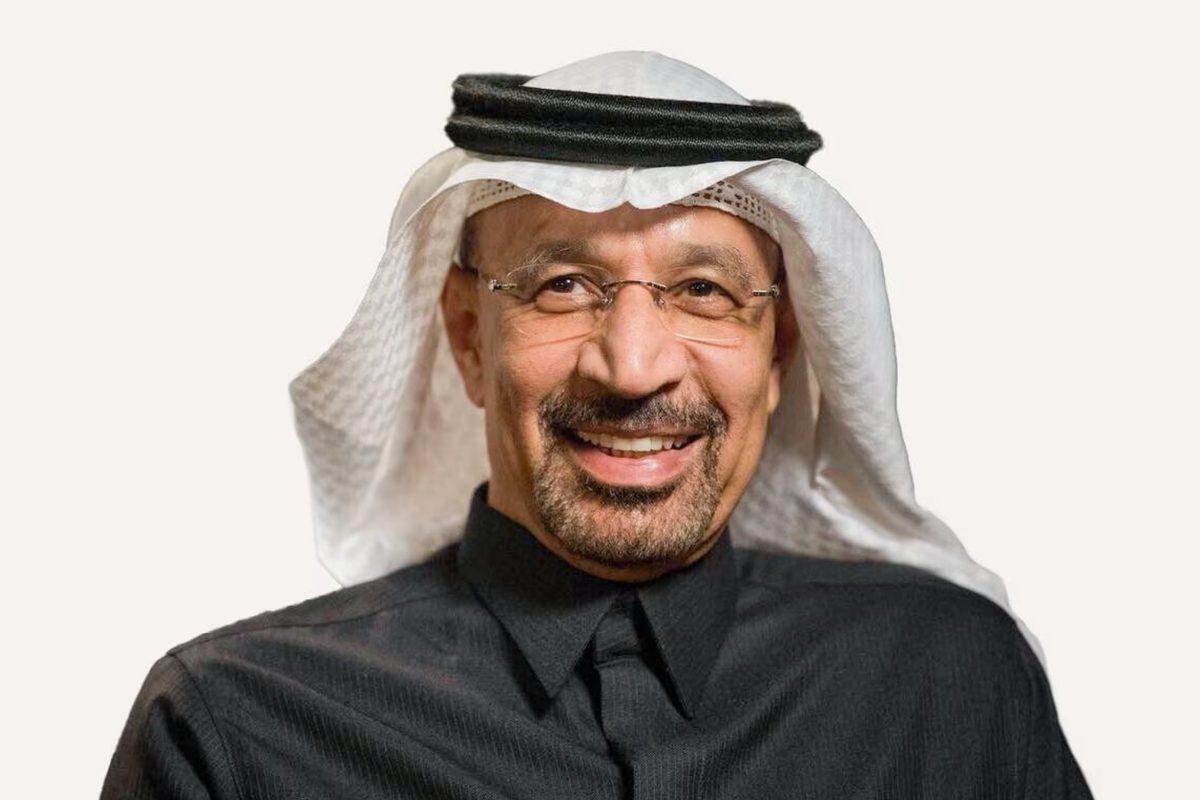
In the space of about a week in September 2019, Khalid Al-Falih lost almost everything that had made him one of the most powerful figures in global energy. First he was removed as chairman of Saudi Aramco, replaced by the head of the sovereign wealth fund. Then his ministry was broken apart, its industry and minerals portfolios stripped away. Days later he was dismissed as energy minister altogether, handing the post to a son of the king — the first member of the royal family ever to hold it.
The timing was the message. It came just as Aramco prepared for the largest public offering in history, a listing Al-Falih had spent years preparing but would not be there to complete.
This is the tension that runs through his entire career. Al-Falih rose from the shop floor of a national oil company to run the world's largest oil producer, then spent the following decade as the state's economic diplomat — energy minister, health minister, and finally the Kingdom's first Minister of Investment. Almost none of those transitions happened on his own timing. He was, repeatedly, an operator the state moved to wherever it needed something built, repaired, or sold — and moved again when its priorities shifted.
Understanding him means separating two things that are easy to blur: the consistency of how he worked, and the fact that he rarely controlled where he worked next.
Thirty Years Inside One Company
Al-Falih was born in Dhahran in 1960, in the heart of Saudi Arabia's oil province, and educated as a mechanical engineer at Texas A&M University, graduating in 1982. He later completed an MBA at King Fahd University of Petroleum and Minerals. He joined Saudi Aramco in 1979 and did not leave for another organization until he entered government in 2015. For more than three decades, one company was his entire professional world.
That matters because it shaped how he thinks. He came up through operations — exploration, production, refining, gas ventures — and ran a joint venture in the Philippines before returning to lead new business development and, from 2007, the company's core operating businesses. By the time he became President and CEO on 1 January 2009, he was not a strategist parachuted in from outside. He was a plant-and-projects man who had spent a career learning how large industrial systems actually get built.
This is the lens through which almost everything he did afterward becomes legible. Al-Falih approached an oil company, an oil cartel, and an investment ministry as versions of the same problem: assemble the components, set the targets, and manage the build.
The CEO Who Tried to Turn an Oil Company Into an Industrial One
Al-Falih inherited Aramco from Abdullah Jum'ah at the start of 2009, and his defining ambition as CEO was not to pump more oil. It was to push the company downstream — into refining and, above all, chemicals — so that a barrel of Saudi crude could be turned into higher-value products inside the Kingdom rather than simply exported.
In 2011 he launched what Aramco called its Accelerated Transformation Program, with the stated goal of making the company the world's leading integrated energy and chemicals enterprise. He described the ambition plainly, telling the industry that Aramco intended to become a "top-three petrochemical company."
That single phrase captured a genuine strategic reorientation. For a company whose identity was built entirely on crude reserves, choosing to define success by its position in chemicals was a deliberate move away from the business that had made it — the kind of decision that only makes sense if you believe the existing model, however profitable, is not enough for the future you are planning for.
The $20 Billion Bet on Chemicals
The clearest expression of that strategy was Sadara, a roughly $20 billion joint venture with Dow Chemical in Jubail, signed in 2011 and one of the largest integrated chemical complexes ever built in a single phase. Al-Falih repeatedly called it a "game-changer," and on the industrial merits the claim held: many of Sadara's products had never been manufactured in the region before.
Sadara did not stand alone. During Al-Falih's tenure Aramco built or expanded a cluster of mega-projects — the SATORP refinery with France's Total, YASREF with China's Sinopec, and the PetroRabigh complex with Japan's Sumitomo — each pushing the company deeper into refining and petrochemicals and each pairing Aramco with a major foreign partner.
Two cautions belong here. First, these were multi-decade projects with long lead times; several were conceived or advanced by predecessors and completed after he left. What is fairly attributed to Al-Falih is not the invention of every project but the strategic insistence that downstream integration, not upstream volume, was the company's next chapter. Second, the record on execution was mixed — Sadara, in particular, later required significant financial restructuring. The vision was his; the outcomes belong partly to those who came after.
From Running Aramco to Running OPEC
Al-Falih's move into government was abrupt and, at first, oddly matched to his skills. A royal decree in April 2015 made him Minister of Health while also naming him chairman of Aramco — an unusual pairing for an oil executive, and a role he held for barely a year.
His real second act came in May 2016, when he replaced Ali Al-Naimi as energy minister after Al-Naimi's near-quarter-century in the job. He took over at a genuinely dangerous moment. Oil sat around $45 a barrel, and Bloomberg reported that Saudi Arabia was losing foreign reserves at a rate of roughly $10 billion a month.
His response was, again, a construction problem. He reversed the "pump-at-will" market-share strategy his predecessor had pursued, and — working with Crown Prince Mohammed bin Salman — reached out to Moscow, convincing Russia to join OPEC production cuts for the first time in more than a decade. That alliance, which the world came to call OPEC+, is the structure that has governed oil markets ever since. By mid-2018, Brent had risen sharply from its lows.
It is worth being precise about the credit. The OPEC+ framework was a political achievement enabled by the Crown Prince's relationship with Vladimir Putin as much as by any minister. But the assembly of it — the shuttle diplomacy between Vienna and Moscow, the technical management of quotas — bore Al-Falih's fingerprints, and observers of the period consistently identified him as the authoritative voice on Saudi production.
That authority did not protect him. When he was removed in September 2019, the reasons cited were structural and political: prices remained stubborn despite deep cuts, the United States had overtaken Saudi Arabia as the world's largest producer on his watch, and the Aramco IPO — the centerpiece of the Crown Prince's plans — was being fast-tracked in a way that favored a leadership more fully aligned with the palace. He had helped stabilize the oil market and prepare the company for sale, and was moved aside before the sale closed.
How He Works
Across three very different institutions, the descriptions of Al-Falih are strikingly consistent. Reporters covering his OPEC years painted a methodical technocrat who reportedly slept only about four hours a night, ran on data, and could be, in the words of one profile, direct to the point of being undiplomatic. Some called him a micro-manager. Few called him a delegator.
That temperament shows most clearly in how he handled the most sensitive question of his career: what, exactly, Saudi Arabia would sell when it floated Aramco. As chairman, he moved to cap the speculation by clarifying that what would be offered was "the economic value of Saudi Aramco and not its oil reserves."
The distinction is revealing. Faced with a politically explosive topic — the Kingdom's willingness to expose its most guarded asset to public markets — his instinct was not to inspire or to sell. It was to define terms precisely and narrow the claim. He treated a question of national strategy the way an engineer treats a specification: state exactly what is and is not included, and remove the ambiguity. It is the same disposition that produced target-driven petrochemical programs and quota-managed oil alliances.
Six Years Selling Saudi Arabia to the World
Al-Falih's longest and final executive chapter began in February 2020, when he became the founding Minister of Investment of an entirely new ministry. The mandate was singular and hard: persuade global capital to come to Saudi Arabia, an economy long seen by foreign investors as difficult to enter.
He built the ministry the way he built everything — around explicit, measurable targets. The clearest success was the Regional Headquarters Program, which required multinationals to base their regional operations in the Kingdom to keep winning government contracts, backed by long tax exemptions. The program set a goal of 500 regional headquarters by 2030. By late 2025, Al-Falih was reporting roughly 675 — a target not merely met but overshot, years early.
The headline number, though, tells a harder story. Vision 2030 set a goal of attracting $100 billion in foreign direct investment a year by 2030. Actual inbound FDI reached only about $31.7 billion in 2024 by the ministry's own accounting — a real improvement over the depressed levels of a decade earlier, but running at roughly a third of the stated target with the deadline approaching.
Two caveats keep this honest. The ministry revised its own FDI methodology during Al-Falih's tenure to align with IMF and UN standards, which complicates clean comparisons and means some of the "record" and "quadrupled" framing reflects how the counting changed as well as how much money arrived. And FDI is driven by oil prices, geopolitics, and the pace of the megaprojects far more than by any single minister. Al-Falih could open the door and cut the paperwork; he could not, by himself, close the gap between ambition and inflow.
Where he did shine was as the state's dealmaker abroad — the role that most resembled his Aramco days of signing partnerships with Dow, Total, and Sinopec. In 2025, for instance, he announced roughly $6.4 billion of Saudi investment into the new government of post-war Syria, spanning real estate, infrastructure, and telecommunications. The investment ministry, in his hands, was as much an instrument of foreign policy as of economics.
What He Is Becoming Known For
The pattern across Al-Falih's career is unusually clear, and it is not the pattern of a "visionary." It is the pattern of a builder and systems operator repeatedly handed the state's most demanding assignments.
At Aramco, he was the man who tried to convert an oil giant into an industrial one. At the energy ministry, he was the technician who assembled the OPEC+ machine. At the investment ministry, he was the target-setter and dealmaker sent to open a closed economy. Different sectors, identical method: define the goal, assemble the components, manage the build, and report the numbers.
His reputation, fairly assessed, rests on capability rather than charisma, and on construction rather than reinvention. He is trusted with things that must be engineered — alliances, complexes, programs — and the recurring judgment on him is competence under pressure. The recurring limit is that his fate has rarely been his own. Three times now, a chapter has ended not because the work failed but because the Kingdom's political priorities moved, and the builder was moved with them.
What Comes Next
On 12 February 2026, Al-Falih was relieved as Minister of Investment and appointed a Minister of State and member of the Council of Ministers — a senior seat without a defined portfolio. His replacement, Fahad Al-Saif, came directly from the Public Investment Fund, where he had led investment strategy and capital finance.
The choice of successor is the tell. Al-Saif's arrival coincided with the PIF's unveiling of a new 2026–2030 strategy and a broader recalibration of Vision 2030 — a pivot toward artificial intelligence, industry, minerals, and manufacturing, and a scaling-back of the costliest real-estate megaprojects. Installing a sovereign-fund financier at the investment ministry aligns the two institutions for a phase defined less by grand construction and more by capital allocation and returns. It is, in other words, a change of method — and Al-Falih's method belonged to the building phase.
What the Minister of State title will amount to is not yet clear, and it would be premature to read it as either promotion or sidelining. What can be said is this: for one of the few Saudi executives to have run the world's largest oil producer, brokered a global oil alliance, and opened the Kingdom's doors to foreign capital, the defining question of his career was never whether he could build what he was asked to build. It was who would decide what came next — and that decision was almost never his.