
Jomana Al-Rashid Is Trying to Change What SRMG Is For
Jomana Al-Rashid inherited a fifty-year-old print institution and set out to change what SRMG is for. The reform is now being tested by the numbers.
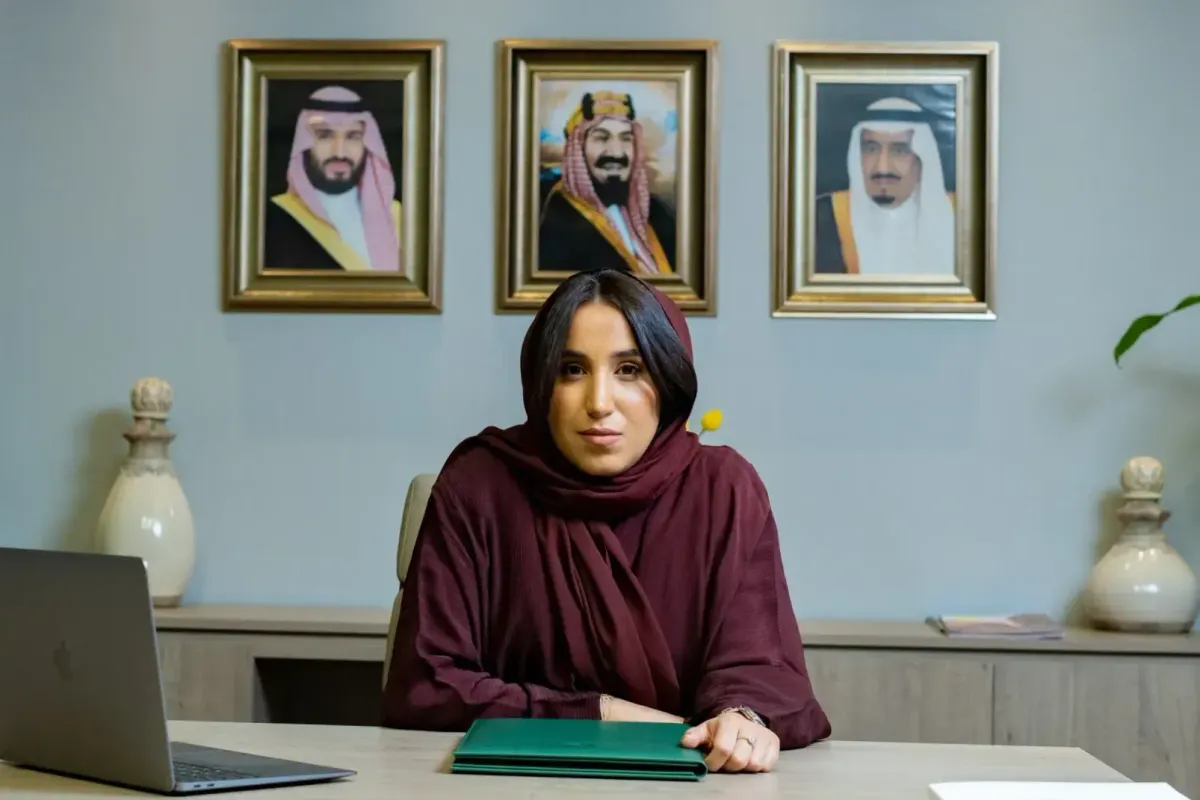
When Jomana Al-Rashid took over the Saudi Research and Media Group in October 2020, the hard question was not whether the company could survive. It was what a fifty-year-old print institution was supposed to become.
SRMG was built on newspapers: Asharq Al-Awsat, Arab News, a portfolio of legacy Arabic titles reaching back to 1972. The company was not failing; it was aging, tied to formats that were quietly losing the audiences they once commanded. Al-Rashid was the first Saudi woman appointed to lead the group, and she arrived with a profile that read more like a communications strategist than a newspaper executive—a master's in international journalism from City, University of London, and earlier roles that ran through advisory and correspondent work rather than the editorial ranks.
What she did next is the reason her tenure is worth studying, and it is more specific than the word "transformation" usually captures. She did not found a new company, and she did not set out to protect the one she inherited. She set out to change what it was organized to do.
"Change is inevitable, but change can be unsettling without forethought and planning."
That line, from a 2021 interview with Asharq Al-Awsat, is a small window into her posture toward the institution. The legacy is treated as a foundation to build on, not a franchise to guard. It is the defining stance of a reformer—distinct from a founder building from nothing, and from a steward whose job is to keep an inheritance intact.
An Institution Defined by What It Had Been
The reformer's problem is that you cannot start clean. Al-Rashid inherited decades of accumulated identity: print titles that carried real institutional weight, a workforce built around publishing, and a revenue base anchored in advertising and printing—the businesses most exposed to the shift she needed to get ahead of.
This is the distinction that matters for understanding her. A builder is judged by what they create where nothing existed. A reformer is judged by whether they can redirect something old without breaking what still works. Al-Rashid took on the second, harder problem, and she took it on inside a company with a long memory and a fixed sense of what it was.
Her answer was to stop treating SRMG as a publisher and start treating it as a platform business—to change the underlying logic of the company rather than refresh its surface.
Changing the Logic, Not Just the Brand
The most visible early signal came in 2021, when the group changed its name from the Saudi Research and Marketing Group to the Saudi Research and Media Group. On its own, a relabeling means little. What sat underneath it did not.
Al-Rashid restructured the company around a set of distinct business verticals rather than a portfolio of titles—among them a media arm to digitize the legacy brands, a research and advisory unit, an events business, a venture capital arm, and an international operation. The logic was to separate the sources of revenue so the company no longer rose and fell with print advertising alone. This is the core of the reform: not new products bolted onto an old model, but a reorganization of what the institution is for.
The Bet on Thmanyah
The clearest single move was Thmanyah, the Arabic audio and podcasting platform. SRMG acquired a 51% stake in 2021 for SAR 33.3 million, and in May 2026 moved to raise that stake to 75%, alongside additional financing to support the platform's development.
The pattern is telling. Rather than build an audio capability from scratch, Al-Rashid bought the one already positioned where Arabic audiences were heading, then folded it into SRMG's reach and advertising infrastructure. That is a reformer's instinct—acquire the instrument of change and connect it back to the existing institution—rather than a founder's. The decision to deepen the stake in 2026, in the middle of a financial downturn, signals that Thmanyah is being treated as central to the new model, not a peripheral bet.
The Reform Meets the Numbers
A reform is only a thesis until the results test it, and SRMG's recent results test it hard.
In 2024, the group reported a net profit of SAR 201.7 million. In 2025, that reversed sharply: revenue fell to SAR 2.673 billion from SAR 3.263 billion, and the group posted a net loss attributable to shareholders of SAR 366.3 million, per its Tadawul disclosures. The pressure did not come from the new businesses failing so much as from the old ones contracting—the decline was concentrated in public relations and advertising and in printing and packaging, the legacy revenue lines the reform was designed to reduce dependence on.
There is a harder detail inside the numbers. The publishing, visual and digital content segment grew its external revenue but moved from profit into loss—meaning the parts of the company meant to carry the future are not yet carrying it. Into 2026, quarterly profitability has been thin: the group reported a net profit of roughly SAR 1.7 million in the second quarter of 2026, barely above breakeven.
The honest reading is this. The reform's central promise was that diversification would insulate the company when print-era revenue faltered. So far, the print-era revenue has faltered on schedule, and the new structure has not yet absorbed the shock. The strategy is built. Its central claim is still unproven. It is also worth separating what happened during her tenure from what can be attributed to her leadership: a legacy media business shrinking under structural pressure is not, by itself, evidence of a management failure—but it is the environment in which her reform now has to work.
How She Frames Change
On the question of how Al-Rashid actually thinks—her decision-making, her operating philosophy—the verifiable record is thinner than the public narrative suggests, and CEOPHY will not manufacture what the evidence does not support.
What can be said is consistent. In her own public language, she frames herself as building on a legacy rather than replacing it—"standing on the shoulders" of the region's earlier media figures while insisting the model has to move. Most of the available first-person material is strategic messaging rather than granular insight into how she runs the company, and that gap is worth naming rather than papering over. The reformer's stance is visible in the framing itself: the past is treated as something to extend, not preserve unchanged.
What She's Becoming Known For—and the Question Underneath It
Across her tenure, Al-Rashid has increasingly been positioned as the face of Saudi media modernization. Her expanding portfolio of roles reflects how that reputation has been received: she chairs Thmanyah's board, chaired the Red Sea International Film Foundation, and sits on the boards of King Saud University and Argaam.
But the most recent chapter complicates the reformer story in a way worth studying carefully. During the 2025–26 cycle, SRMG deepened its institutional ties to state-linked bodies. In August 2025, it signed a strategic memorandum of understanding with Diriyah Company, a Public Investment Fund entity, framed around expanding media collaboration and supporting cultural and national narrative-building. In April 2026, the group announced framework agreements with a Saudi government authority and was awarded the contract to operate and manage the Al Thaqafeya channel.
This introduces a steward-like note into a reformer's record. It is possible to read Al-Rashid as reforming the business model—verticals, digital, audio—while simultaneously deepening SRMG's role as a state-aligned media asset. Reforming what the company sells is not the same as changing what it is for, and the second question is the one these deals raise.
It also raises the discipline question CEOPHY returns to across every profile: the seat versus the person. How much of this reform is Al-Rashid's leadership, and how much is her executing a modernization the moment demanded—with state capital and national media priorities flowing into the Saudi sector regardless of who occupied the chair? The reformer reading is defensible. It is only credible if it holds both facts at once: that she made an early, coherent, documented bet, and that the environment pushing for that bet arrived at the same time she did.
What Comes Next
The reform is no longer in question as a direction; it is in question as a business. Al-Rashid has spent five years converting a print-era publisher into a diversified platform company, and the structure she assembled is real and disclosed. The 2025 loss is the first serious stress test of whether that structure can do the thing it was designed to do—hold the company steady when its oldest revenue lines fall away.
The most useful way to understand Jomana Al-Rashid is therefore not as someone who has already remade SRMG, but as a reformer living inside the years when a reform gets judged. And the question that will define her record is sharper than whether the new businesses grow. It is whether she is changing what SRMG does, or ultimately stewarding what it is for—and whether, in the end, those turn out to be the same thing.