
Khaled Biyari Grew stc's Profits While Its Revenue Fell. That Was the Strategy.
As Group CEO, Khaled Biyari made stc more profitable while its revenue fell. Inside the discipline, the Jawwy bet, and the reinvention he started.
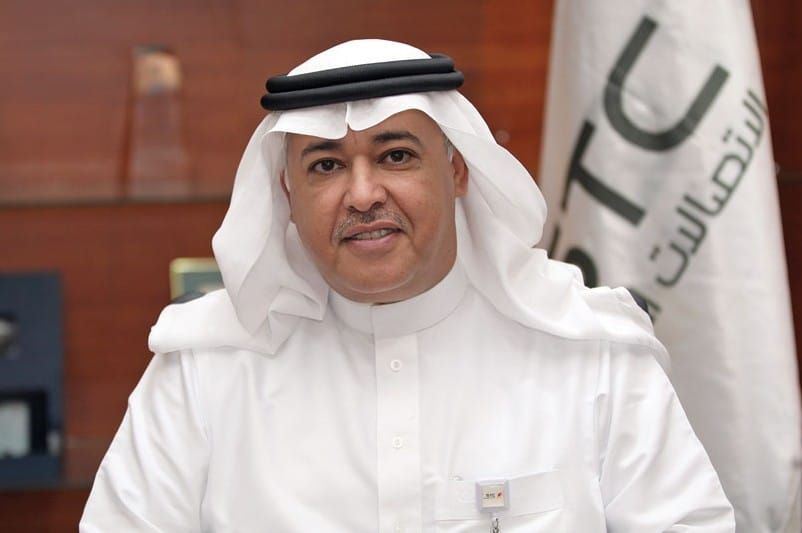
When Khaled Biyari became Group CEO of Saudi Telecom Company in April 2015, he inherited the largest telecom operator in the Middle East. He also inherited a problem its size concealed. The business that had made stc dominant was beginning to shrink.
Voice revenue was under pressure. International calling had long been a dependable earner. It was about to be undercut by the lifting of the ban on VoIP services such as internet-based calls. Consumer spending was softening as the wider Saudi economy tightened. For a company used to telling a growth story, the honest question was no longer how fast stc could expand. It was what stc should become before its old model ran out.
Biyari's answer was unusual for a telecom incumbent. He did not defend the top line. He spent three years making stc more profitable as its revenue declined. In the same period, he quietly began the digital reinvention that his successor would later brand and scale.
The Engineer Who Arrived Through the Technology Door
Biyari did not come up through sales or marketing. That is the traditional route to a telecom corner office. He took a different one. He is an engineer, with a PhD in electrical engineering from the University of Southern California, completed in 1990. He taught communication systems at King Fahd University of Petroleum and Minerals for five years before moving into industry.
Before stc, he was a senior vice president and general manager at Advanced Electronics Company, a Saudi high-technology firm. He joined stc in 2013 to run technology and operations. He became chief operating officer in January 2015 and was named CEO three months later.
That background matters. Biyari treated stc less as a phone company to be protected and more as a technology business exposed to disruption. The same forces were reshaping every industry built on data. That view shaped nearly every decision that followed.
A National Champion at the Edge of Disruption
The threat to stc was structural, not cyclical. Smartphones and social platforms had saturated one of the world's most connected populations. Value was migrating from voice minutes to data and digital services. The incumbents that owned the voice business had the most to lose.
Biyari read the shift plainly. In a 2015 interview with Oxford Business Group, he argued that the task was to price services around data rather than voice, as more mature markets already had. Revenue still had to fund the network.
He framed the company's direction as a move from telco to what he called a "digital enabler." The strategy was labeled ICT 2020. Its stated ambition was to make stc the region's leading ICT player. The point was not to sell more of the old product. It was to change what stc sold.
Building the Future Outside the Company
His clearest strategic decision was also his most revealing. In May 2016, stc launched Jawwy, an all-digital mobile brand with its own SIM, app, and online-first customer care. It was one of the earliest attempts by any operator to build a mobile experience natively around digital and social channels.
What mattered was not the product. It was the structure. Biyari did not build Jawwy inside stc's existing organization. He housed it in a separate business unit with its own leadership. His reasoning was that a legacy telco could not produce a genuinely digital product from within its legacy self.
Innovating in the core mobile business, Biyari said at the launch, "requires a new breed of talent, and the organisational DNA and agility of an internet player."
That sentence explains the logic. Biyari understood that the obstacle to reinvention is rarely the technology. It is almost always the incumbent's own culture, incentives, and habits. By ring-fencing Jawwy, he tried to protect a new way of working from the pull of the old one. It was an implicit recognition that transformation tends to fail inside the structures it is meant to replace.
Profits Up, Revenue Down
The financial record of his tenure is where the evidence matters most. The numbers move in two directions at once.
In 2017, his last full year as CEO, stc's consolidated revenue fell 4.3% to SR 51,362 million. Biyari attributed the decline mainly to weaker consumer performance and the lifting of the VoIP ban, which cut into international-call revenue. Those pressures were partly outside his control. They were partly offset by growth in data.
Yet net profit rose over the same year. It climbed 14.3% to SR 10,174 million. Operating profit rose 11.6%, and EBITDA rose 7.1%. The company achieved this by cutting costs faster than revenue fell. In the first quarter of 2017 alone, stc reduced operating expenses by 13.6% year on year.
This is the accurate shape of his leadership, and it resists an easy label. Biyari did not preside over a growth story. It would be misleading to describe his tenure as one. He presided over a discipline story. He traded top-line expansion for stronger margins, tighter cost control, and a healthier base from which to fund the digital future.
How He Thought About People
The second pillar of his tenure was cultural. Biyari built an internal program he called Employee First. Its premise was simple. A workforce is the mechanism through which any customer strategy actually reaches customers.
"People are everything to us, whether employees, partners or customers," he told Changeboard in 2017.
He defined the idea narrowly. Employee First was not about richer benefits, he said. It was about accountability, transparency, and giving staff the authority to act. stc reported that its internal organizational-health score rose by 22 points over three years. It also reported becoming the first Saudi company to enter Brand Finance's ranking of the world's 500 most valuable brands. Both figures originate with the company and are best read as its own assessment.
The instinct is consistent with the rest of his approach. An engineer who reorganized Jawwy around a different operating model applied the same logic internally. Change the system people work within, and behavior follows.
What He Became Known For
Biyari's reputation is not that of a dealmaker or a public brand-builder. It is quieter and more specific. He is the technologist who ran stc like a technology company during the years its industry began to turn.
He is associated with cost discipline over expansion. He is associated with reinvention pursued through structure rather than slogans. He is also associated with an early, credible reading of where telecom value was heading. The clearest external signal of how he was regarded came in February 2018. He left stc not for another company but for government. He was appointed by Royal Decree as Assistant Minister of Defense for Executive Affairs, one of the more sensitive executive posts in the Kingdom.
What Came Next
The reinvention Biyari started was named and scaled by others. Months after he left, stc launched its DARE strategy: digitize, accelerate, reinvent, expand. It became the framework for the company's next decade of growth. DARE is his successor's achievement, not his. But its foundations were laid during his three years in the chair. They include the digital-first thinking, the willingness to build outside the legacy core, and the shift from voice to data.
That is the idea worth keeping about Khaled Biyari. He led stc at a moment when the easiest move was to defend a shrinking business. He chose instead to make it leaner and point it somewhere new. His tenure is a reminder that the most consequential transformations often arrive first not as growth, but as the discipline to stop chasing it.