
The CEO Who Made SABIC Smaller
Abdulrahman Al-Fageeh spent 40 years inside SABIC. As CEO, he sold, closed and narrowed it, a study of leadership by subtraction.
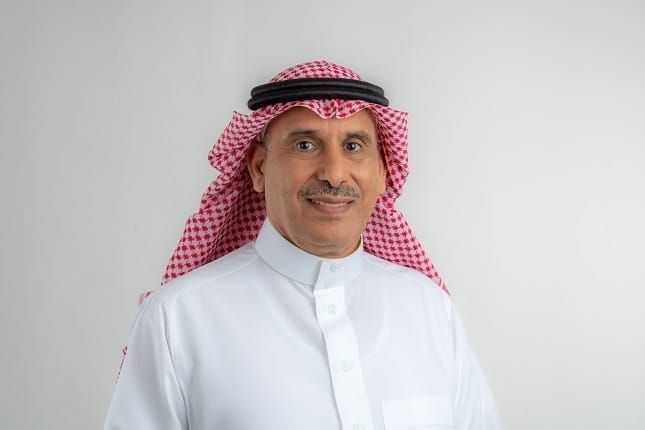
When Abdulrahman Al-Fageeh took over Saudi Basic Industries Corporation, the question facing the company was not how to grow. It was what to stop doing.
He had spent more than forty years inside SABIC building the opposite instinct. He joined as a project engineer, ran plants, launched a petrochemical company as its first president, and chaired a long list of affiliates before taking the top job. Then, as chief executive, he spent most of his tenure taking the company apart — selling its steel arm, shutting a European cracker, and exiting businesses across three continents.
The result was visible on the balance sheet. Under Al-Fageeh, SABIC reported the first net losses in its history. But those losses were, in large part, the price of a decision he made on purpose: to absorb the accounting cost of shrinking the company rather than defer it.
Announcing the Hadeed sale in 2023, he said it would let SABIC "refocus on its strategy to become the global leader in the chemicals industry."
That is the sentence that explains his tenure. Al-Fageeh did not run SABIC as an empire to be expanded. He ran it as a portfolio to be narrowed.
The Insider Who Reached the Top After Four Decades
Al-Fageeh is not the kind of CEO who arrives from outside with a mandate to disrupt. He is the product of the institution he eventually reshaped.
He joined SABIC as a project engineer and moved through project management, plant operations, and business management over a career the company describes as spanning more than 40 years. He was the first president of Yanbu National Petrochemical Company (YANSAB), held it for six years, and later became Executive Vice President of Petrochemicals in October 2016 — running SABIC's single largest business globally. Along the way he chaired a dozen SABIC affiliates, from Petrokemya to the Gulf Coast Growth Ventures joint venture in the United States.
His path to CEO opened suddenly. In September 2022, then-CEO Yousef Al-Benyan was appointed Saudi Arabia's Minister of Education by royal decree, and Al-Fageeh stepped in as acting chief executive. The board confirmed him permanently on March 21, 2023.
The detail matters for what came next. When Al-Fageeh began selling and closing assets, he was not disposing of businesses he barely knew. He had helped build many of them. The decision to let them go carried more weight because of how well he understood what he was giving up.
The Strategy of Subtraction
Al-Fageeh inherited a company under structural pressure. Global petrochemical overcapacity, weak demand from China and Europe, and compressed margins were squeezing producers across the industry. His response was not to wait out the cycle. It was to change the shape of the company.
The Assets He Chose to Sell
The largest move came early. In September 2023, SABIC agreed to sell its steel subsidiary Hadeed to the Public Investment Fund for an enterprise value of SAR 12.5 billion ($3.3 billion), with ownership transferred in 2024. Hadeed had supplied rebar and steel to Saudi Arabia's construction sector for decades; Al-Fageeh framed its exit as a way to concentrate SABIC on chemicals.
Others followed. SABIC disposed of its stake in Bahrain's aluminium producer Alba, closed its Teesside cracker in the United Kingdom, and in January 2026 sold its European petrochemicals business and its engineering thermoplastics operations across the Americas and Europe for a combined $950 million.
The logic was consistent across every deal: sell what is peripheral, keep what is core, and stop trying to be a diversified industrial conglomerate. Each transaction was defended in the same terms — portfolio optimization and focus on chemicals.
The Price on the Balance Sheet
That focus came at a measurable cost, and Al-Fageeh did not hide it.
In 2023, SABIC swung to a net loss of SAR 2.77 billion ($739 million) — its first ever — driven mainly by the fair valuation of Hadeed rather than by operational collapse. The company returned to a net profit of SAR 1.54 billion in 2024. Then, in 2025, it posted a far larger net loss of SAR 25.78 billion ($6.87 billion) on revenue of SAR 116.53 billion ($31 billion).
The headline number was severe, but its composition is the more honest story. SABIC's losses from discontinued operations rose by roughly SAR 20.8 billion year over year, and the Teesside closure alone carried a SAR 3.78 billion impairment. Much of the 2025 loss was the accounting cost of Al-Fageeh's own divestments — not a sign that the underlying business had stopped functioning. Operating profit stayed positive at SAR 4.37 billion, and the company continued paying dividends throughout.
This is the interpretation the numbers support: Al-Fageeh chose to take the pain of restructuring in concentrated hits rather than spread it out or avoid it. A CEO more concerned with protecting a clean earnings line would have moved more slowly. He did not.
What He Kept Building
A profile that stopped at the divestments would be incomplete. Al-Fageeh cut with one hand and invested with the other, and the two moves belong to the same strategy.
Through the downturn, he protected SABIC's Fujian Petrochemical Complex in China — a $6.4 billion joint venture with an expected annual ethylene capacity of 1.8 million tons, sanctioned in January 2024 and targeted for completion in 2026. In Jubail, SABIC brought online a new MTBE plant at Petrokemya, described as the largest single MTBE production facility in the world at one million tonnes per year. He also leaned on SABIC's ownership structure: the company reported SAR 12.26 billion in synergies with Saudi Aramco, its 70 percent shareholder, in 2025.
Underpinning all of it was a restructuring effort Al-Fageeh set a hard target for: a Transformation Program aiming to deliver $3 billion in recurring annual EBITDA by 2030, built from cost savings and value creation.
Read together, the divestments and the investments point the same direction. Al-Fageeh was moving capital out of low-return, non-core, and geographically scattered assets and into core petrochemicals concentrated in Asia's largest market. The company got smaller, but not aimlessly.
How He Talked About the Numbers
Al-Fageeh's public language was remarkably steady, even as the results were not. Quarter after quarter, he returned to the same diagnosis of the market.
"Production overcapacity persisted in the petrochemical industry, continuing to squeeze margins and depress utilization rates," he said in SABIC's full-year 2025 results statement.
The framing tells you how he thought about the company's problems: as external and structural, not self-inflicted. In his account, SABIC was a well-run operation caught in a bad cycle, and his job was to control what could be controlled while the market corrected.
Two habits reveal that instinct clearly. From the second quarter of 2025, SABIC began reporting adjusted financial metrics that excluded one-off and non-operational items — a change that produced a positive adjusted net income of SAR 2.1 billion for a year with a SAR 25.78 billion reported loss. It is a legitimate way to show underlying performance, and also, unavoidably, a framing choice made precisely as the reported figures turned ugly. CEOPHY notes both readings without collapsing them into one.
The second habit was safety. In nearly every results statement, Al-Fageeh foregrounded operational safety, citing a total recordable incident rate of 0.07 in 2025 — the lowest in SABIC's history. When profit is negative and the market is beyond your control, the plant floor is a metric you can still win on. His repeated emphasis on it reads less as public relations than as the reflex of an operator who came up running facilities.
What He Is Becoming Known For
Al-Fageeh will not be remembered as a growth-era CEO. He led SABIC through a contraction, and his reputation is built on how he managed it.
What emerges is a discipline of focus. The recurring pattern across his tenure — the Hadeed sale, the European exits, the Teesside closure, the concentration of capital on Fujian and core chemicals — is the same idea executed repeatedly. He was willing to make the company smaller, report unprecedented losses, and defend both as the cost of a clearer strategy.
His words and actions matched, which is the harder thing to sustain. He said SABIC would refocus on chemicals, and then he sold the businesses that were not chemicals. In an industry where executives often narrate transformation without delivering it, the consistency between what Al-Fageeh described and what he did is itself the signal.
What Comes Next
Al-Fageeh retired on April 1, 2026, and the board named Faisal Al-Faqeer — a senior Aramco executive and former CEO of Sadara Chemical Company — as his successor. Appointing a leader from the majority owner suggests SABIC's strategy will move into even closer alignment with Aramco.
That leaves an open question, and it is the right one to end on. Al-Fageeh spent his final years building a leaner, more concentrated SABIC and betting that focus would pay off when the cycle turned and projects like Fujian came online. The verdict on that bet will arrive after he has left the chair. He reshaped the company on the conviction that a smaller SABIC would be a stronger one — and handed someone else the job of proving him right.