
The Man Building Saudi Fashion Has Never Made a Garment
Burak Cakmak spent 25 years in fashion without designing a garment. Now he's building Saudi Arabia's entire fashion industry from the ground up.
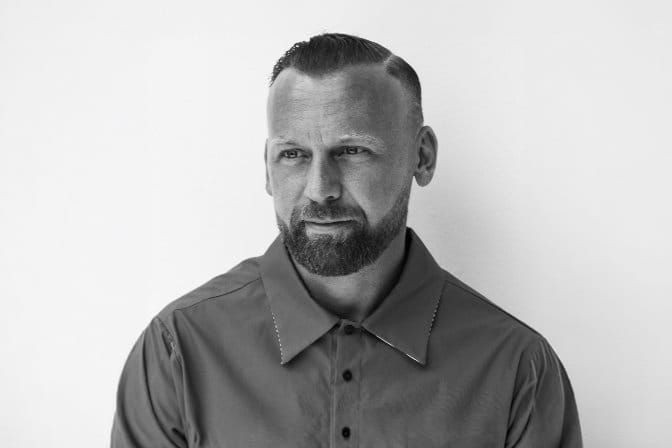
When Burak Cakmak was named to lead Saudi Arabia's Fashion Commission in early 2021, he was handed an assignment most fashion executives never face. Not a brand to revive. Not a house to modernize. An entire industry to build, in a country that, by his own description, had almost no fashion ecosystem before 2020.
What makes the appointment revealing is the resume behind it. Cakmak has spent a quarter of a century in fashion without ever designing a collection, running a label, or merchandising a store. His work has always sat in the parts of the industry the customer never sees: supply chains, corporate responsibility, sustainability accounting, and education. Saudi Arabia hired the man who builds the scaffolding, and asked him to build the building too.
"The fashion industry has been built completely from scratch, with hardly an ecosystem in Saudi Arabia before 2020."
That is not modesty. It is a description of the actual problem, and it explains why a sustainability specialist, rather than a designer or a retail merchant, got the job.
The Career That Prepared Him for a Job That Didn't Exist
Cakmak's route into fashion was oblique. He earned a bachelor's degree from the Middle East Technical University in Turkey in 1997, then entered the industry in 2000 through Gap Inc., where he spent roughly eight years as a senior manager of social responsibility across its San Francisco and London offices.
In 2008 he moved to London and joined the group now called Kering as its first director of corporate sustainability, working across luxury houses including Gucci, Yves Saint Laurent, Bottega Veneta, and Alexander McQueen. Kering became the first major luxury group to publish an environmental profit-and-loss account, an attempt to put a monetary figure on its impact on nature. Cakmak was inside that function during its early years.
Two patterns were set by this point. The first: he specialized in the unglamorous machinery of fashion, the sourcing, the standards, the measurement. The second: he kept moving toward the source of the supply chain rather than its shop window.
He went on to hold roles at the sustainability consultancy MADE-BY and as vice president of corporate responsibility at Swarovski, where he led the education program of its Waterschool initiative. Then, in 2015, he made the move that most clearly signaled his thinking. He became Dean of Fashion at Parsons School of Design in New York, one of the industry's most influential training grounds.
The logic was consistent. Rather than fix sustainability brand by brand, he went to the place where the next generation of designers is formed.
"It's a new set of rules that the industry operates in, so it's important for design students to understand the challenges they will face as they grow."
By 2020 he had built a career defined by a single conviction: that fashion is changed less by any individual product than by the systems, standards, and people behind it. It was, in retrospect, close to ideal preparation for a country that needed all three at once.
Building an Industry Before Building a Brand
Cakmak's first substantive act was not a runway. It was a strategy.
Within months of his appointment, the Fashion Commission finalized a sector development plan built on a deliberately unglamorous principle: plan in waves, balancing short-term wins achievable in under twelve months against mid- and long-term goals. The mission statement described a fashion industry "fully integrated along the value chain," language that reads more like industrial policy than fashion marketing. That was the point.
The programs followed the same logic. Saudi 100 Brands, the Commission's flagship initiative, is not a showcase but a development pipeline: a year-long mentorship offering local designers funding, manufacturing support, and international exposure, including dedicated showrooms opened in Paris in 2023. Education partnerships followed, including courses with France's Institut Français de la Mode and an academic pathway launched with Al Yamamah University. In 2026 the Commission signed a partnership with Italy's Minerva Hub aimed squarely at manufacturing, the part of the value chain that is hardest to build and easiest to skip.
Each of these addresses a different missing layer: talent, training, production. None of them, notably, is a garment.
Riyadh Fashion Week, and What It Is For
The most visible thing Cakmak has built is also the one most easily misread. He launched Riyadh Fashion Week in 2023, putting around 30 local designers on a formal runway for the first time in the country's history. The event grew quickly. Its 2024 edition expanded the roster, and by its third edition in October 2025 it featured more than 45 designers, over 30 of them Saudi, and drew Vivienne Westwood to stage its first show in the Middle East.
It would be easy to treat the fashion week as the achievement. Cakmak, revealingly, does not.
"We are not simply participating in the global fashion conversation, we are helping shape it."
The spectacle, in his framing, is an instrument. It exists to attract buyers, investors, and international brands to a market being built underneath it. The risk he is managing is the one that shadows every state-backed cultural project: that the show becomes the substance, and the slower work of factories, supply chains, and durable businesses never gets done.
The Numbers, and What They Show
The Commission's own research puts the Saudi fashion market at roughly $32 billion in 2025, projected to approach $40 billion by the end of the decade, with fashion and beauty together contributing about 2.6 percent of GDP and the sector employing an estimated 343,000 people, a majority of them women.
These figures deserve a careful reading, and Cakmak's own discipline invites it. Most of that $32 billion is consumption: a young, brand-hungry population buying clothes, much of it imported. It measures the size of the market, not the strength of the domestic industry Cakmak was hired to build. The gap between those two things, between buying fashion and making it, is precisely the territory his manufacturing and talent programs are meant to close. It is also where his tenure will ultimately be judged.
How He Measures Success
Asked in 2026 what a strong fashion sector actually requires, Cakmak gave an answer that doubles as his operating philosophy.
"Success will not be measured by the number of brands entering the market but by the strength of the ecosystem we build together."
The sentence is worth sitting with, because it rejects the metric almost everyone else in his position reaches for. Brand count, show size, and celebrity attendance are the easy numbers, the ones that generate headlines and satisfy stakeholders quickly. Cakmak is explicitly declining to be judged by them. He is pointing instead at capacity: manufacturing, training, regulation, the invisible infrastructure that determines whether an industry survives without permanent subsidy.
This is the sustainability executive's instinct applied to industrial development. His entire pre-Saudi career was spent arguing that fashion's real story lies beneath its surface. He is now running that argument at the scale of a national economy.
What He Is Becoming Known For
Cakmak is establishing a reputation as a particular kind of builder: the one who constructs the parts of fashion that do not photograph well. In an industry organized around image, he is known for supply chains, standards, and schools.
That reputation carries an honest qualification. The Fashion Commission is a government body, resourced and mandated by the state as part of a national economic diversification agenda. Cakmak's leverage comes from that backing. What can fairly be credited to him is not the existence of the resources but the shape of what is being built with them: the sequencing, the weight placed on production and education over pure spectacle, and the refusal to declare victory on the strength of a good fashion week.
There is a critical version of this story, and it is worth stating plainly. Top-down, state-funded cultural industries can produce impressive launches that struggle to become self-sustaining. Whether Saudi fashion becomes a genuine industry or an expensive showcase is not yet decided, and the honest answer today is that it is too early to know.
What Comes Next
The real test of Cakmak's tenure will not be the next Riyadh Fashion Week. It will be quieter and slower: whether a Saudi brand emerges that competes globally on its own merits, and whether the factories, suppliers, and trained designers he is assembling can function when the state's attention eventually moves elsewhere.
He has said the sky is the limit for Saudi fashion, the kind of line his job requires. His more revealing statements are the ones about waves, ecosystems, and the things that cannot be measured in a single season. If Cakmak is right about how industries are actually built, the most important work of his tenure will be the part no one puts on a runway.