
What NEOM Needed Was Not a Visionary
Aiman Al-Mudaifer took over NEOM not to expand it, but to shrink it. A look at the finance executive quietly resetting Saudi Arabia's boldest project.
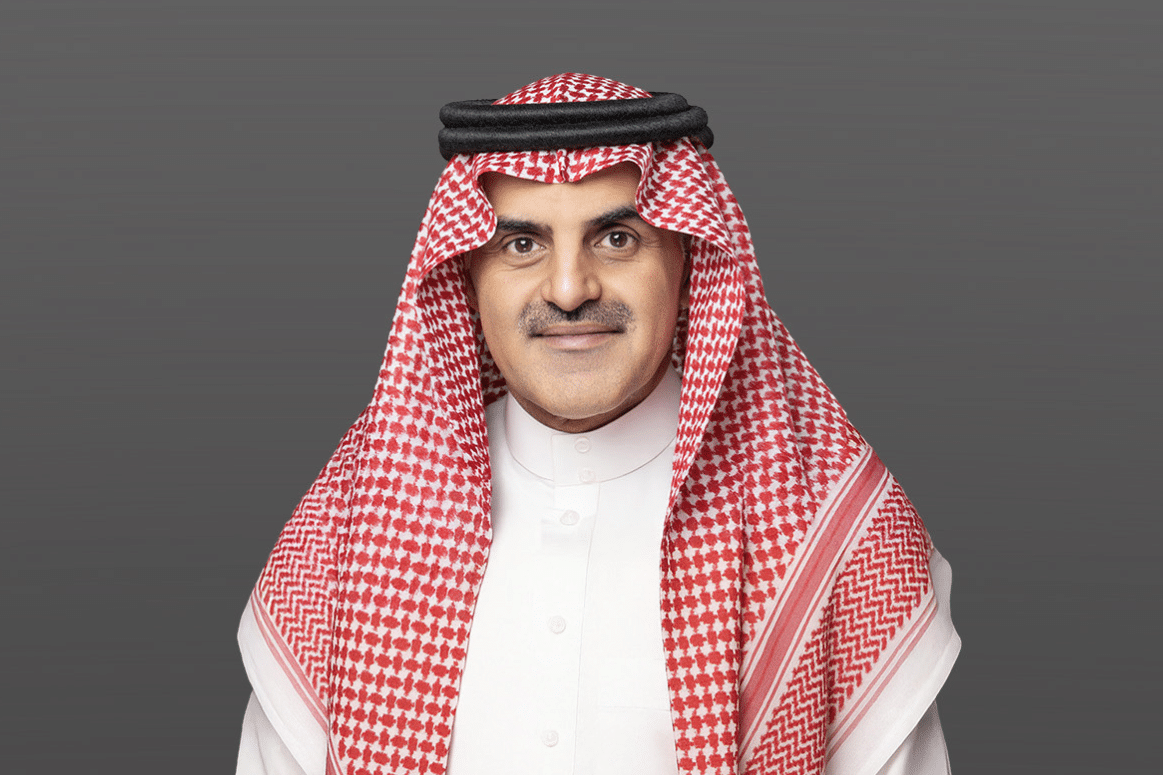
In November 2024, when Saudi Arabia removed the founding chief executive of NEOM, it did not reach for a bigger dreamer. It reached for an accountant of sorts.
Nadhmi Al-Nasr had run the $500 billion giga-project since 2018 through its most ambitious and most troubled years. His departure followed months of damaging coverage. There were missed milestones and allegations of worker mistreatment, which NEOM had publicly disputed while defending its management culture. Months later, a Wall Street Journal report described an internal audit that projected the cost of finishing The Line to its original design at roughly $8.8 trillion, with a completion date near 2080. That same audit found what it called "evidence of deliberate manipulation" of financial projections. It attributed the finding to certain members of management rather than to any named individual.
It is worth being precise about what Al-Nasr was and was not responsible for. The scale itself was not his invention. The Line's original specifications were unveiled by the Crown Prince, and the mandate Al-Nasr carried out was defined above him. His tenure is fairly criticized for how the project was run. It is less fairly blamed for the size it was asked to reach.
The person chosen to take over was Aiman Al-Mudaifer. He was not an architect, an urban planner, or a conference-stage futurist. He was a finance and real estate executive from the Public Investment Fund. His appointment was less a change of leadership than a change of discipline. NEOM had spent six years learning how to expand. It was now being handed to someone whose entire task would be to decide what it should stop building.
Where He Learned to Count
Al-Mudaifer's background is the opposite of the mythology NEOM was sold on.
He holds a bachelor's degree in systems engineering from King Fahd University of Petroleum and Minerals in Dhahran. Some press accounts loosely describe his education as "petroleum engineering," likely borrowing from the university's name. The more specific institutional records cite systems engineering. His early career ran through the machinery that measures and governs capital rather than the studios that imagine cities. He held a credit role at the Saudi Industrial Development Fund, then moved to the Capital Market Authority, where he worked in licensing and investigations.
From there he moved into real estate leadership. He served as CEO of Andalus Company and CEO of Shomoul Holding. He then joined the Public Investment Fund in 2018 to head its Local Real Estate Investments Division.
That PIF role matters more than any single line on his résumé, because it is where he already held NEOM in his hands. The division oversaw the Kingdom's five flagship giga-projects: NEOM, Red Sea Global, Qiddiya, ROSHN, and Diriyah. Alongside them sat a portfolio of more than 50 real estate and infrastructure investments. He chaired the board of the King Abdullah Financial District company, where he oversaw the award of construction contracts exceeding SAR 8 billion as the long-stalled district was finally brought into partial operation.
In other words, before he ran NEOM, he sat on the capital-allocation side of it. He had spent six years watching the project consume money from the position of the fund that pays for it.
The Work of Subtraction
Most CEO profiles measure a leader by what they built. Al-Mudaifer's defining work so far is measured by what he has decided not to build.
The Review
Almost immediately after taking over, Al-Mudaifer launched a wide-ranging strategic review of NEOM's scope, priorities, and cost. Consultants working on the project described the shift in mandate plainly. The work moved away from open-ended transformation and toward tightly scoped projects tied to delivery and measurable results.
That reframing, from ambition to implementation, has driven nearly every consequential decision since.
The Results
The clearest symbol of the reset is The Line, the 170-kilometer linear city of twin mirrored skyscrapers that had become NEOM's global signature. Under Al-Mudaifer, work on The Line was pushed back until after 2030. Its design is being significantly reworked to make it cheaper to build.
The residential ambitions have collapsed in stages that read almost as a chronicle of the reset itself. NEOM once projected 1.5 million residents by 2030. That figure was cut to 300,000. By 2026 it had been revised again to up to 100,000.
The retreat has its own price. NEOM's 2026–2030 budget reportedly includes around $16 billion (SAR 60 billion) in anticipated payments to contractors to terminate long-term agreements. By one account, that means Saudi Arabia expects to spend more cancelling parts of NEOM over five years than building them. Unwinding a project of this scale, it turns out, is nearly as expensive as the ambition that created it.
Inside the organization, the changes have been just as blunt. Layoffs have cut into a workforce of roughly 6,000 direct employees, with more reductions reported. Staff who had been required to live at the remote construction site are being relocated toward Riyadh, a reversal of a signature policy of the previous era. In January 2026, NEOM created a new unit to centralize oversight that had previously been scattered across sub-project teams.
None of the inherited failures belong to Al-Mudaifer. The runaway costs, the audit findings, and the worker-treatment allegations were all set in motion before him. What belongs to him is the response. He chose to shrink, to centralize, and to pay to stop.
What His Decisions Reveal
Al-Mudaifer has given the public almost nothing to quote. Since taking the role he has kept a deliberately low profile, a sharp contrast to his predecessor's visibility at industry conferences. In the absence of a stated philosophy, his choices have to speak for him. They are unusually consistent.
He has treated capital discipline as the organizing principle, not growth. He has centralized control rather than distributing it. And he has been willing to absorb large, visible costs, including billions in cancellation penalties, to end commitments the numbers no longer supported. Taken together, these look less like the moves of someone protecting a vision than someone auditing one.
There is an important limit to how much of this can be attributed to Al-Mudaifer alone. NEOM is chaired by Crown Prince Mohammed bin Salman, who also chairs the Public Investment Fund that funds it and sits atop its sub-project boards. The public framing of NEOM's budget reductions has come largely from financial officials, including PIF Governor Yasir Al-Rumayyan and the finance ministry, rather than from Al-Mudaifer himself.
So the honest reading is this. Al-Mudaifer is the executor of a reset whose direction was set above him. His authorship lies not in choosing to shrink NEOM, but in how the shrinking is being managed: its sequencing, its cost, and its credibility.
What He Is Becoming Known For
For a career built quietly in finance and real estate, Al-Mudaifer is acquiring a very specific reputation. He is the executive brought in to bring order to a project that had lost it.
He is becoming the counterpoint to the era that preceded him. That period was defined by scale, spectacle, and public presence. His is defined by cost control, restructuring, and near-silence. He is not the builder but the operator who contains. In a giga-project landscape that spent a decade rewarding ambition, he represents the moment the Kingdom began rewarding restraint.
Whether that reputation ultimately reads as competence or as damage control will depend on where NEOM lands.
What Comes Next
The real test of Al-Mudaifer's leadership will not be whether he can build The Line. It is whether he can bring NEOM down to a deliverable size without the exercise being remembered as the abandonment of Vision 2030's most famous promise.
That is a harder task than it sounds. Subtraction is politically dangerous in a way expansion never was. Every cancelled contract, every lowered target, and every relocated employee is a concession that the original vision could not be met as stated. Managing that retreat while preserving the story, that some version of NEOM is still coming, may be the most delicate assignment any Saudi executive has been handed this decade.
If he succeeds, Al-Mudaifer may become the first CEO of the giga-project era to be judged not by what he built, but by what he had the discipline to stop.
This profile draws on PIF and NEOM disclosures, Saudi and international business reporting (including Reuters, the Financial Times, Bloomberg, Semafor, and the Wall Street Journal), and institutional biographical records. Cost, timeline, and workforce figures reflect reporting available as of mid-2026 and remain subject to revision as NEOM's strategic review concludes. Al-Mudaifer has given few public statements in the role. Where his thinking is inferred, it is inferred from his decisions and labeled as interpretation.