
What Sarah Al-Suhaimi Built, and What She Presided Over
Sarah Al-Suhaimi chaired Tadawul through the Aramco listing and MSCI inclusion. But her most attributable results came before — running NCB Capital.
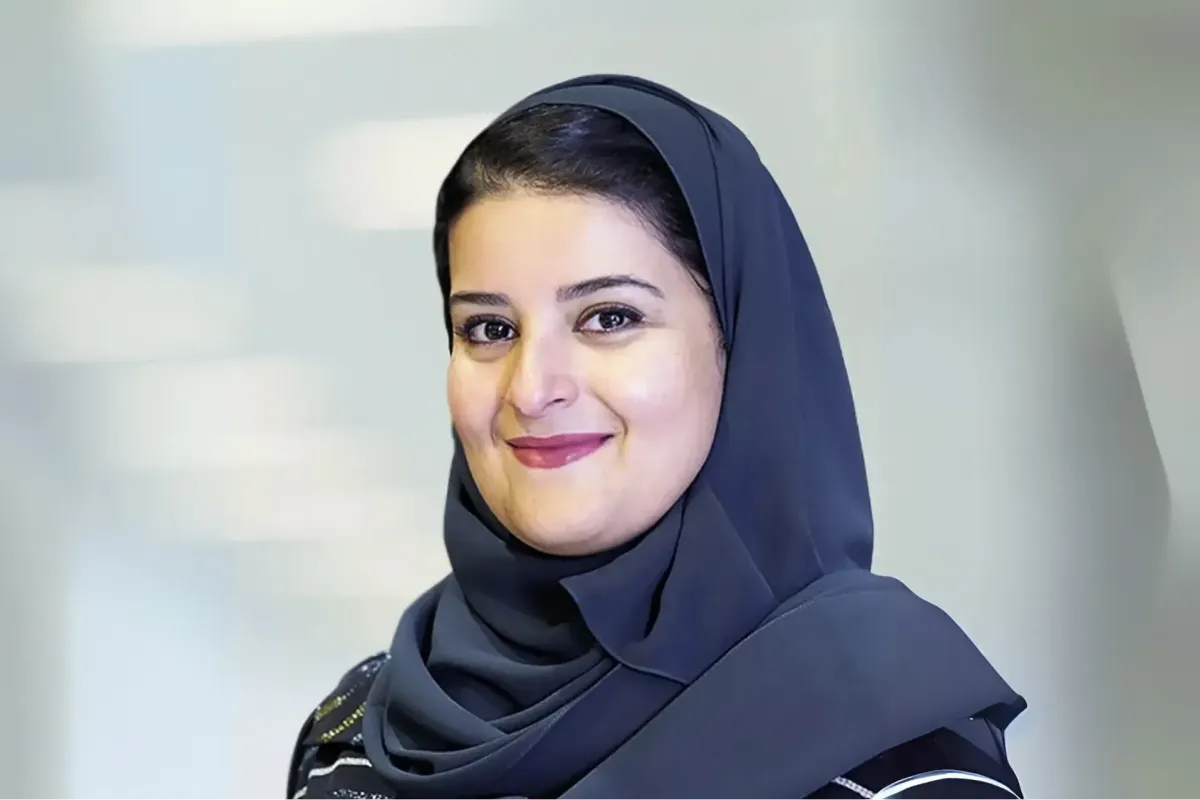
When the Saudi stock exchange named Sarah Al-Suhaimi its chairwoman in February 2017, it was making history and taking out an insurance policy at the same time. She was the first woman to chair Tadawul, and the market she was about to lead was on the edge of the largest transformation in its history: index inclusion, the Aramco listing, and the opening of a once-closed national bourse to the world's capital.
The appointment carried an obvious symbolism. What is easier to miss is the harder question underneath it — the one that runs through her entire career. What did Al-Suhaimi actually run, and what did she preside over? The two are not the same, and the difference is the most honest way to understand her.
Before the chairmanships and the board seats, she had built something measurable as an executive. After 2017, she became the public steward of a transformation driven by many hands. Her story is a useful lesson in the distance between the two.
"Diversity in leadership is not only a matter of fairness but also a driver of innovation and success."
She said that to Womenpreneur in late 2023, near the end of her Tadawul tenure. It reads at first like a line for a conference stage. But the conviction behind it was earned somewhere far less comfortable, two decades earlier, when she was the only woman in the room and no one assumed she belonged there.
The Room She Had to Earn Her Way Into
Al-Suhaimi came from a banking family. Her father, Jammaz Al-Suhaimi, ran Saudi Arabia's Capital Market Authority in the mid-2000s and later chaired Gulf International Bank until his death in 2017. She grew up close to the machinery of Saudi finance, which was both an advantage and a liability.
The advantage was fluency. The liability was assumption. When she began her career in the asset-management division of Samba Financial Group, she was the only woman in her department, and in a 2021 interview she described having to fight her colleagues' belief that she owed her job to her father's connections — that she was passing time until she found a husband.
She dealt with the doubt by insisting on the work. She pushed to join the bank's training program, and once her results were visible the perception shifted. She rose to senior portfolio manager, handling more than US$12 billion in local equities. The number mattered less than what it established: that her standing came from performance, not lineage.
That distinction — earned versus assumed — became the organizing principle of everything that followed. It is also why the record of what she personally built deserves to be read carefully, and generously, on its own terms.
The Executive Record: NCB Capital
If you want to see Al-Suhaimi as an operator rather than a figurehead, the years to study are 2014 to 2021, when she was Chief Executive Officer of NCB Capital — the investment arm of the National Commercial Bank, then the Kingdom's largest bank. She had spent the intervening years at Jadwa Investment, which she joined in 2007 as head of portfolio management and left as Chief Investment Officer. The CEO seat was where she carried full executive responsibility for the first time.
What the Numbers Show
The Saudi Tadawul Group's own board disclosures describe her NCB Capital tenure in specific terms. During her leadership, assets under management grew more than fourfold. The firm's brokerage market share rose by more than ten percent, and it executed a series of large investment-banking mandates that earned it league-table standing in debt capital markets and M&A.
These are the claims worth holding onto, because they are attributable. A chief executive owns the results of the business she runs. When AUM quadruples and market share climbs on her watch, the causal line between the leader and the outcome is short and defensible.
The Exit and the Merger
Her NCB Capital chapter closed in early 2021, shortly before the National Commercial Bank merged with Samba to create Saudi National Bank (SNB) — the largest lender in Saudi Arabia. NCB Capital became SNB Capital. She had, in effect, run the investment franchise of one of the two banks that would form the country's dominant financial institution, then stepped away as that institution was assembled.
It is a clean way to leave a job: on the strength of the numbers, before the reorganization that would have redefined it.
The Tadawul Years: Steward of an Opening
Here the attribution becomes more complicated, and honesty requires slowing down.
Al-Suhaimi chaired the Saudi stock exchange from 2017 until the end of 2025 — close to nine years, and the most consequential stretch in the market's modern history. But she chaired it. She did not operate it. Tadawul's day-to-day execution and its public technical face belonged to its chief executive, Khalid Al-Hussan, and the market's regulatory transformation was led by the Capital Market Authority. The chair of a board is a steward and an overseer, not the engineer of a market's plumbing.
That framing matters because of what happened during those years.
The Milestones That Arrived on Her Watch
In 2019, after roughly three years of preparation, Saudi Arabia completed its phased inclusion in the MSCI Emerging Markets index, reaching a weight of about 2.8 percent, with parallel inclusion by FTSE Russell. The upgrade pulled billions of dollars of foreign capital into a market that, only a few years earlier, foreign investors had barely been able to access.
Then came the defining event of the decade. In December 2019, Saudi Aramco listed on Tadawul, raising roughly US$25.6 billion — the largest initial public offering on record — and briefly carrying a market value above two trillion dollars once trading began. It cemented the exchange's standing as a serious emerging-market venue.
In April 2021, the exchange restructured into a holding company, Saudi Tadawul Group, with four subsidiaries spanning the exchange, clearing, depository, and technology. Later that year, the group listed itself on the market it operates.
None of these were one-person achievements, and Al-Suhaimi has not generally claimed them as such. They were the product of a regulator, an executive team, and a national policy agenda to diversify the economy away from oil. Her role was to govern the board through the transition and to represent the market to the outside world — a role she did take on directly.
Where Her Own Voice Is on the Record
The clearest evidence of her personal involvement is not in the ribbon-cuttings but in the market data she spoke to publicly. In 2019 she told Reuters that foreign investors had been net buyers of more than US$20 billion of Tadawul-listed shares since the start of that year, and that the number of qualified foreign investors had grown roughly 200 percent year-to-date. She spoke, in other words, as the market's steward and interpreter — the person who explained the transformation, even when she was not the one wiring it together.
That is a real function, and a real form of authority. It is simply a different one from the executive authority she held at NCB Capital, and CEOPHY draws the line deliberately.
How She Thinks
Across her interviews, a consistent operating philosophy emerges, and it is quieter than the profiles that celebrate her tend to suggest.
The first theme is meritocratic. Her early experience — proving she belonged rather than assuming it — hardened into a belief that diverse leadership is a practical advantage, not a courtesy.
"Diversity in leadership is not only a matter of fairness but also a driver of innovation and success."
Read against her biography, the statement is less a slogan than a description of method. She entered rooms where her competence was doubted and treated the doubt as something to be answered with output. The claim that diversity drives results, rather than merely correcting an imbalance, is the argument of someone who had to make the case on the numbers.
The second theme is institutional patience. Speaking about Tadawul's 2021 restructuring, she framed it around the need for diversification and innovation in the financial market rather than around any single dramatic move. Her instinct runs toward building durable structure — holding companies, governance frameworks, index eligibility — the unglamorous infrastructure that compounds over years rather than headlines that fade in days.
What She Is Becoming Known For
Step back from any single title and a pattern comes into focus. Al-Suhaimi is repeatedly chosen to sit at the head of Saudi institutions during their moments of transition and internationalization.
She chaired the exchange as it opened to global investors. She chairs Lazard's financial advisory business in the Middle East and North Africa, a role she took in 2022 as the firm expanded its regional footprint. She has held board seats at stc, Saudia, the General Authority of Statistics, and the Cultural Development Fund, and served as a trustee of the IFRS Foundation since 2019 — a seat that places a Saudi voice inside the body that writes global accounting standards.
The through-line is trust rather than showmanship. She is the figure institutions install when they want credibility with international capital and a steady hand on governance. That reputation is valuable precisely because it is understated — and it is worth noting that the achievements most firmly attributable to her, at NCB Capital, are the ones least often cited in the coverage of her.
What Comes Next
In January 2026, her career turned again. When the Saudi Tadawul Group renewed its board, Mazen Al-Romaihas was named chairman, closing her nine-year chapter at the exchange. Weeks later, she was appointed Chairperson of Bahri, the National Shipping Company of Saudi Arabia, for a three-year term, and took the chair of its executive committee.
It is a telling move. Bahri is a state-linked industrial company — part-owned by the Public Investment Fund and Saudi Aramco's development arm, operating a fleet of more than a hundred vessels — rather than a financial institution. Al-Suhaimi is stepping out of the market she long presided over and into one of the companies that operates inside the real economy. Alongside her continuing Lazard role, it suggests a shift from chairing the venue where capital is traded toward governing the enterprises where it is put to work.
The question she carries forward is the same one that has followed her from Samba onward. She has proven she can run a business and prove her worth by the numbers. She has proven she can steward an institution through transformation and speak for it credibly. What she has yet to fully show is what she builds when the institution is hers to shape from the chair rather than inherit at its moment of change. Bahri, and whatever follows it, will be the answer.