
Why Saudi Arabia Handed Its First World Expo to an Aramco Operator
Talal AlMarri spent 30 years inside Aramco before PIF put him over Expo 2030 Riyadh. A look at why the Kingdom treats its first World Expo as a build.
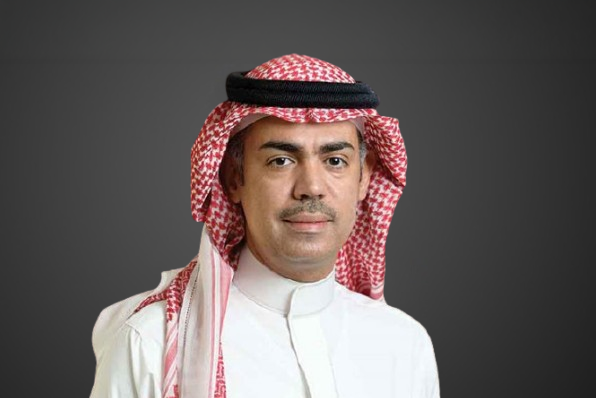
When the Public Investment Fund needed someone to deliver Expo 2030 Riyadh, the most expensive World Expo venue ever planned, on a deadline that cannot move, it did not reach for an events impresario or a tourism-brand executive.
It reached for a chemical engineer who had spent three decades inside Saudi Aramco. In June 2025, PIF appointed Talal AlMarri as chief executive of the Expo 2030 Riyadh Company (ERC), the wholly owned entity responsible for building and operating the Kingdom's first World Expo. The choice says something about how Saudi Arabia is approaching the event. Expo 2030 is usually discussed in the language of spectacle and soft power. AlMarri's career suggests it is being run, first, as a delivery problem.
Thirty Years Inside the World's Largest Oil Company
AlMarri did not arrive at the Expo from the world of culture or entertainment. He arrived from Aramco, where he had worked since 1995.
He joined through the company's College Degree Preparatory Program, and in 2000 completed a BSc in chemical engineering at King Fahd University of Petroleum and Minerals. His first posting was at Safaniyah, the largest offshore oil field in the world.
What followed was not a single specialism but a sequence of very different operational mandates. That pattern, being moved between unlike problems and expected to run each one, is the most useful thing to understand about him.
A Résumé Built on Running Things, Not Selling Them
By the time he was handed the Expo, AlMarri had already led three organizations that had almost nothing in common except scale and complexity.
Managing Aramco's Money in Europe
In November 2017 he became president and CEO of Aramco Overseas Company, the enterprise's Hague-based vehicle for overseas investment and treasury, a role he held until August 2021. The unit functioned, in his own description, as a financial hub making strategic acquisitions on behalf of the wider company.
During those years he sat on the shareholder committee of ARLANXEO, Aramco's wholly owned synthetic-rubber business in the Netherlands, and — by Aramco's own account — oversaw a digital overhaul of the organization. These were investment and integration responsibilities, not the consumer-facing work most people would associate with a future Expo boss.
Running Aramco's Reputation
In September 2021 he moved to become vice-president of Public Affairs. The brief was reputation: global corporate communications and commercial sponsorships (including Aramco's Formula 1 and cricket partnerships) alongside citizenship programs such as Ithra, the King Abdulaziz Center for World Culture.
This is the one chapter of his career that maps cleanly onto Expo 2030's public dimension. Managing a global sponsorship portfolio and a major cultural institution is closer to running a world's fair than managing an oil field is.
Running a Small City
In June 2023 he became senior vice-president of Community Services, responsible for the physical fabric of Aramco's communities: hundreds of buildings, roughly 33,000 office users, water and wastewater utilities, capital projects, and conservation areas. The same month, he was appointed chairman of the National Training Center for Facilities and Hospitality Management.
Read together, the three roles describe a particular kind of executive: one repeatedly trusted to operate large, physical, stakeholder-heavy systems. That is close to the shape of the job he took next.
Expo 2030 Is a Delivery Problem Before It Is a Spectacle
Expo 2030 Riyadh will run for six months, from 1 October 2030 to 31 March 2031, on a 6-million-square-metre site north of the capital, beside the future King Salman International Airport. Saudi Arabia won the hosting rights in November 2023, taking 119 of 165 votes in the first round of the BIE ballot.
The figures around the event are large and, for now, mostly projections. The government has allocated $7.8 billion to build what is described as the most expensive Expo venue in history. PIF has framed the event as contributing close to $70 billion to national GDP, and Al Rajhi Capital has estimated a total economic impact of around $94.5 billion in gross value added. ERC projects roughly 42 million visits and participation from 197 countries and 29 organizations. These numbers describe ambition, not yet outcomes.
What can be assessed is the first year of work under AlMarri.
The First Year of Groundwork
Since his appointment, ERC has assembled the delivery machinery of a megaproject. Bechtel was named project management consultant and Buro Happold lead design consultant in July 2025; a concept masterplan by the architecture practice Lava was completed that September.
Site work has moved faster than the marketing. By early 2026, about 1.5 million square metres — roughly a quarter of the site — had been levelled, with bulk earthworks completed by the local contractor Binyah and main utilities packages awarded to Nesma & Partners and Al Yamama. ERC has said construction of the main buildings will break ground in the third quarter of 2026, with major construction targeted for completion by the end of 2029.
None of this is the Expo itself. It is the unglamorous groundwork — earthworks, utilities, procurement, scheduling — on which the Expo depends. It is also, not coincidentally, the kind of work AlMarri has done before.
How AlMarri Talks About the Job
AlMarri is not a vision-statement executive. In public he speaks in the vocabulary of operations — packages, schedules, momentum — rather than the vocabulary of spectacle.
Announcing an infrastructure award in 2026, he described progress as "strong and sustained momentum across every front," from delivery to design contracts. It is a revealing choice of words. Faced with a project the world will judge as a show, he consistently describes it as a build.
That instinct predates the Expo. Asked during the pandemic how Aramco Overseas was responding, he reduced a complex situation to a single line:
"the safety of our people, industry and communities … our number one priority."
The statement is not eloquent, and it is not trying to be. It reflects a manager who, under pressure, narrows rather than broadens — who names the priority and organizes around it. For a project whose central risk is delivery against a fixed date, that is arguably the more relevant temperament.
What He Is Becoming Known For
AlMarri's emerging reputation is not that of a showman, or of a strategist with a signature idea. It is that of an operator handed complicated, high-visibility mandates and asked to make them work — overseas investment, corporate reputation, community infrastructure, and now a World Expo.
There is a consistent logic to the appointments. Each required someone comfortable with scale, stakeholders, and physical delivery, and relatively indifferent to the glamour of the assignment. PIF's decision to place him over Expo 2030 fits that pattern rather than breaking it.
It is worth being precise about what this reputation does not yet include. He has held the role for little more than a year, and the event he was hired to deliver is still years away. The groundwork has advanced on schedule, but the harder phases — vertical construction from late 2026, then the event and its afterlife — are still ahead.
The Verdict That Won't Arrive Until 2030
The real test of AlMarri's leadership is not the contracts signed in 2026. It is whether, in October 2030, a 6-million-square-metre site rises on time and, once the six months end, becomes the permanent mixed-use district — retail, residential, tourism — that Riyadh intends to keep.
That is a builder's test, not a showman's. And it is why the most telling thing about Talal AlMarri may be the decision that put him there: at the moment Saudi Arabia chose someone to deliver its largest-ever global event, it chose an engineer who treats spectacle, above all, as something to be built on schedule.